
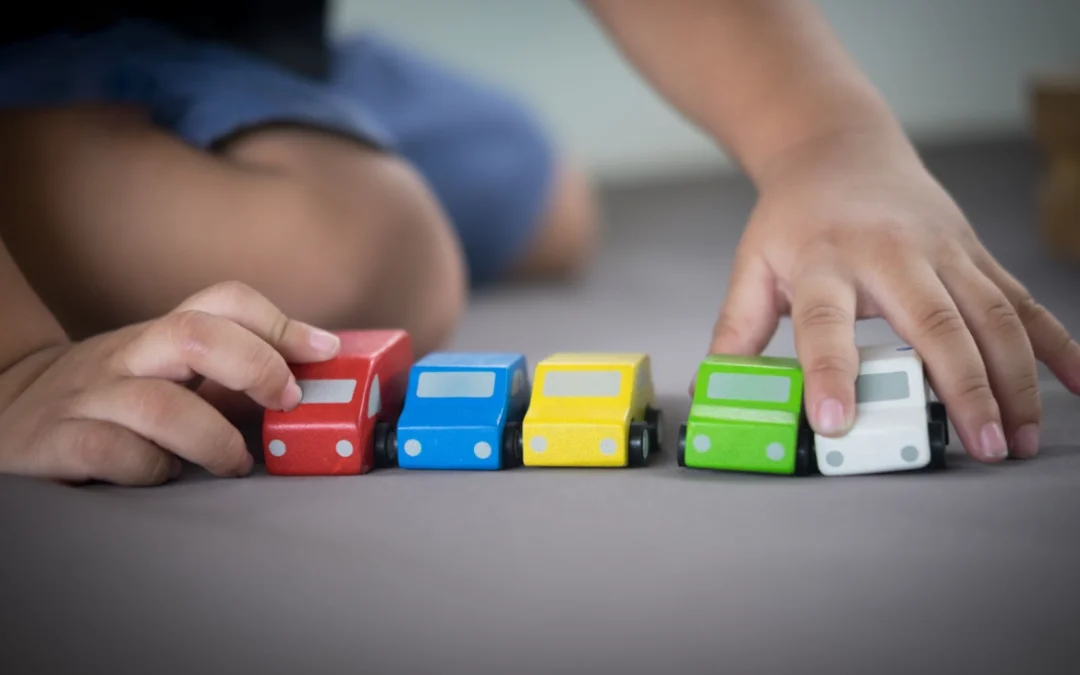
The world of stimming in autistic children is as diverse as their personalities, ranging from hand flapping and spinning to lining up toys. If the word “stimming” is new to you, or still confusing, keep reading to the end so you can feel more confident. For many parents, the action of stimming can trigger uncomfortable feelings. Maybe it’s dysregulating to your own nervous system, or maybe you’re worried it will hinder your child’s social interactions. It’s likely you’re concerned about how others might perceive your child. Your thoughts are free to exist here without judgment. We know you are just trying to make sense of it all. Let’s dive a little deeper to gain a greater understanding of stimming, from its purpose to its value for autistic individuals.
What is Stimming? →
Stimming, or self-stimulatory behavior, is a common characteristic of autistic individuals. It is a behavior that normally involves repetitive body movements or repetitive movement of objects. It often serves as a means to regulate sensory input, manage emotions, and find comfort in a world that can feel overwhelming. While stimming can sometimes be challenging for some families, especially in social settings, it’s essential to remember that it serves a crucial purpose.
Why Stimming Happens →
- Sensory regulation: Stimming can help to reduce sensory overload or provide specific sensory input that supports overall regulation.
- Emotional regulation: It can be a way to process or cope with strong emotions, such as anxiety, upset, or excitement.
- Communication: Stimming can be used as a form of nonverbal communication, conveying needs or feelings.
- For Enjoyment! I don’t think everyone does it for regulation purposes.
Supportive Strategies →
- Accept and Understand: Stimming has a function for your child. Understanding its purpose can help you respond with empathy and support.
- Create a Sensory-Friendly Environment: Provide a safe space. Minimize sensory overload by reducing noise, bright lights, and overwhelming stimuli.
- Provide and Model Alternative Sensory Strategies: Offer alternatives to stimming that can provide similar benefits, such as a weighted blanket, gum, or fidget toys. Present these as options, without expectations, as only the individual can determine if their needs are being met.
- Encourage Communication: Model various forms of communication, including visuals, gestures, signs, AAC, and verbal language to support your child’s ability to express their needs and feelings. This can reduce the reliance on stimming as a primary form of communication.
- Establish Routines: Predictability can be calming for autistic individuals. Consistent routines can help reduce anxiety and the need for stimming as a coping mechanism.
- Respect Personal Space: Allow your child to engage in stimming without interruption when possible. Respecting their need can help reduce frustration and allow them to assume an optimal state of regulation.
- Educate Others: Inform teachers, caregivers, and peers about stimming and its importance. This can create a more supportive environment for your child and others.
- Seek Professional Support: If stimming becomes overwhelming or interferes with daily life, consider consulting with an Autistic Adult or professional for additional guidance.
As we know, every child is unique. What works for one child may not work for another. Try to be patient with the process as your child explores different strategies and finds what works best for them. Remember, stimming is a natural and valuable part of being autistic. By embracing and supporting your child’s stimming behaviors, you can help them feel empowered to support their individual needs and thrive.

